Rare Diseases in India: The Genetic Roots and Genomic Solutions
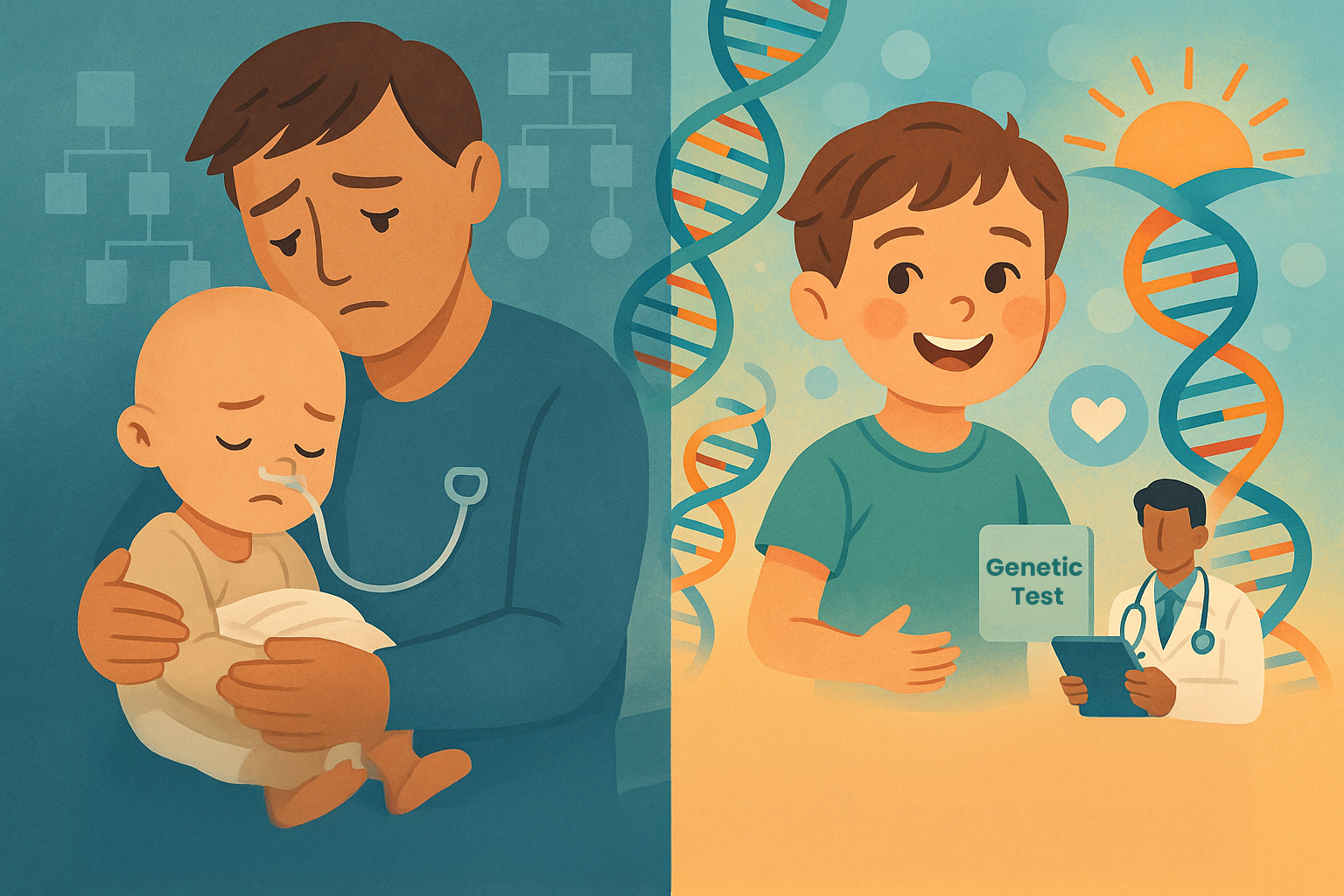
- When Rare Isn’t So Rare!
- Factors adding to the rare disease burden in India
- The Science Behind this Risk: How Genetics Explains Consanguinity’s Impact
- The Real-World Impact
- Why does this matter for India’s future?
- Genetic Testing: A Game-Changer in Rare Disease Detection
- The Current Landscape of Genetic Testing in India
- Conclusion
- References
Imagine a scenario where, as your child grows, you notice they are lagging behind their peers, or they develop unexpected allergies to certain foods, or they suddenly encounter a devastating illness of which you had no clue!
Now, adding to the ordeal, what if you have to run from doctor to doctor, test to test, without a clear answer for what’s wrong with your child: A Nightmare! Months turn into years, hope turns into frustration: and all you're left with are more questions than answers.
Scary! Isn’t it?
We live in a nation where millions of families are searching for answers to mysterious, often devastating illnesses that affect their children. This is the reality for India, where one in every 20 Indians suffers from a rare disorder. Do you know what’s behind this high burden of rare diseases in India? Let’s explore the factors behind India’s rare disease crisis and how genetic testing can offer a solution.
When Rare Isn’t So Rare!
Rare diseases, also called orphan diseases, are conditions that affect a small percentage of people but are often lifelong, serious, and challenging to diagnose. The World Health Organization (WHO) defines rare disease as one with a frequency of less than 6.5:10 per 10,000 people. These numbers vary in different countries, and although there is no official count for India, the Organization for Rare Diseases India (ORDI) considers a disease to be defined as rare if it affects 1 in 5,000 people or less.
Most rare diseases are genetic in origin (about 80%) and these include conditions like spinal muscular atrophy (SMA), Duchenne muscular dystrophy (DMD), and cystic fibrosis: many of which are severe, chronic, and life-threatening. Also, in a vast number of rare diseases, the age-of-onset may be in childhood (around 70%).
As estimated 3.5:5.9% of world’s population (263 to 446 million people) are affected by rare diseases, and India alone accounts for an estimated 72 to 96 million of these cases. It is noteworthy that a high prevalence of β-thalassemia has been reported in specific regions of India-Gujarat, Punjab, West Bengal, Odisha, and Andhra Pradesh-compared to the rest of the country: Similarly, Duchenne Muscular Dystrophy, although a rare disease, has a higher-than-benchmark prevalence in Tamil Nadu.
Factors adding to the rare disease burden in India
Despite their global status as “rare,” certain genetic disorders are relatively more frequent in specific Indian communities. The unusual trend arises due to a combination of historical: cultural: and biological factors unique to the Indian population.
- Founder mutations: Centuries of endogamy (marriage within specific communities) and geographical isolation have led to a high prevalence of specific disease-causing mutations in several Indian communities: e.g. mutation in the GNE gene, which causes GNE myopathy.
- Population heterogeneity: Inter-population gene variation complicates the development of standard gene panels and necessitates region-specific approaches. India is home to numerous distinct communities, each with unique genetic pools due to caste, tribe, language, and geography.
- High birth-rate and large population size: With an increase in population, the chances of individuals born with rare diseases also increases: A significant number of affected newborns remain undiagnosed and untreated due to weak screening systems.
- Lack of Universal Newborn Screening: Regular newborn screening is not prevalent in India due to lack of awareness, high costs, advocacy, and gaps in public policy: However, a few states/union territories-Chandigarh, Goa, and Kerala: have started implementing these tests.
- Spontaneous (de novo) Mutations and Environmental factors: Approximately, 30% of rare diseases arise from spontaneous mutations, especially in conditions like autism, epilepsy, and cardiomyopathies: This makes parental genetic testing crucial for accurate diagnosis: Additionally, environmental and epigenetic factors such as prolonged exposure to toxins, malnutrition, or infections can alter gene expression: contributing to disease onset or progression.
- Consanguinity: Did you know that a centuries-old tradition could be silently shaping the health of future generations in India? Consanguineous marriages which are unions between close biological relatives like first cousins: are still widely practiced in many parts of India: While these marriages can help maintain family ties: they also increase the risk of passing on harmful genetic mutations.
The Science Behind this Risk: How Genetics Explains Consanguinity’s Impact
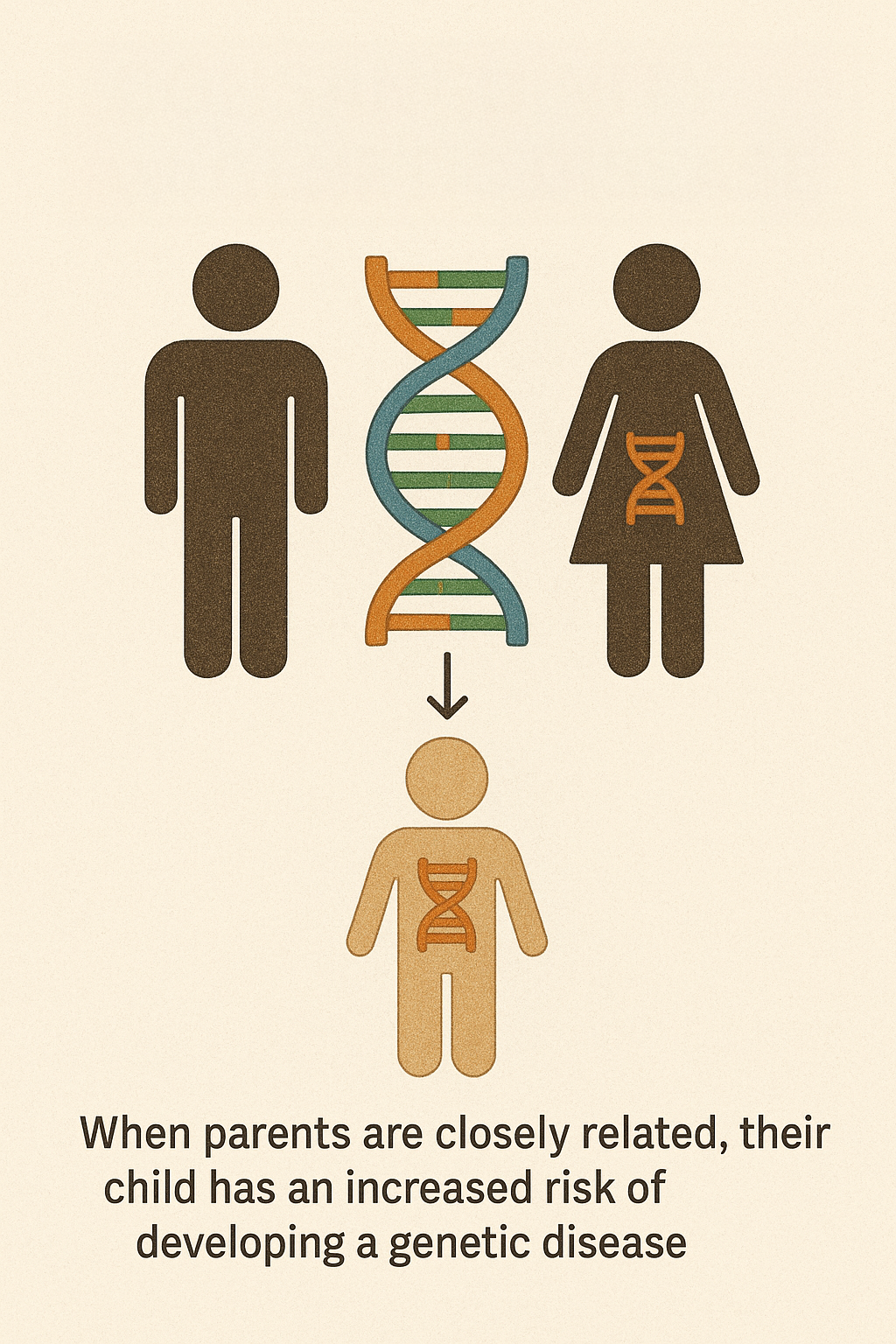
When both parents come from the same family background or community: they are more likely to share some of the same genes: This means their children have a higher chance of inheriting the same rare faulty gene from both sides: If that happens: the child can develop a genetic disease that only shows up when both copies of the gene are affected: The risk of birth defects or congenital disorders in children and grandchildren of consanguineous couples is about 4.5%: Unfortunately: these genetic risks translate into real hardships for families: especially in regions where consanguinity is more common.
The Real-World Impact
The consequences of Consanguineous marriages are not just numbers: they’re lived experiences: Higher rates of congenital malformations and birth defects: especially in southern India: Increased risk of psychotic disorders, heart disease, hypertension, stroke, cancer, and diabetes in children and grandchildren of consanguineous couples: Greater likelihood of miscarriage, stillbirth, and child mortality in regions with high consanguinity.
Why does this matter for India’s future?
In the next two to three decades: India could face a public health and economic crisis due to continued lack of awareness and prevalence of consanguineous marriages being practiced in many parts of India: The impact of this cultural custom will not only affect individual families but also threaten the nation’s healthcare system, workforce productivity, and overall development trajectory: Addressing the genetic burden requires not just awareness but action: and genomic diagnostics are key to driving that change.
Genetic Testing: A Game-Changer in Rare Disease Detection
Genetic testing involves analyzing a patient's DNA to detect genetic mutations that cause inherited diseases like rare genetic disorders: Advanced, high through-put technology- Next-Generation Sequencing (NGS)- has revolutionized rare disease detection by significantly improving diagnostic accuracy, reducing diagnosis times, and enabling personalized treatments.
- Early and Accurate Diagnosis: While traditional tests typically take an average of 5-7 years to diagnose the exact cause of the disease: genetic testing can comprehensively identify genetic mutations early: facilitating timely intervention and thereby reducing diagnostic uncertainty.
- Personalized Treatment Plans: Genomic data enables the development of targeted therapies tailored to the patient's specific genetic profile.
- Preventive Genetic Counseling: Families with a history of genetic disorders can benefit from genetic counseling to assess risk and plan for future pregnancies.
The Current Landscape of Genetic Testing in India
While genetic testing has gained traction globally: accessibility in India remains limited due to high costs and inadequate infrastructure: However: several initiatives are working to bridge this gap:
- Government Initiatives: The National Policy for Rare Diseases (NPRD) 2021: classifies rare diseases into 3-groups providing guidelines for their diagnosis, treatment and management and also information regarding the Centres of Excellence (CoEs) for rare diseases (NPRD).
- Diagnostic Laboratories: Many start-ups and companies are expanding genomic testing services across India.
- Awareness Programs: Increased public awareness campaigns can help reduce the stigma around genetic testing and encourage early diagnosis.
Conclusion
The rising burden of rare diseases in India, compounded by consanguinity, underscores the urgent need for accessible and affordable genetic testing: By embracing advanced genetic testing technologies and increasing public awareness, India can significantly reduce the burden of rare genetic disorders and pave the way for personalized, preventive healthcare.
As science unlocks the secrets of our genes: you have the power to ask questions, seek answers, and make choices that could change the course of your children’s lives.
References
- WNS. Tackling Rare Diseases in India: Orphan Drugs & Market Opportunities.
- Organization for Rare Diseases India. Rare disease definition [Internet]. https://ordindia.in/about-rd/rare-disease-definition/. Accessed 2025 Jul 11.
- Lee CE, et al. Rare genetic diseases: Nature’s experiments on human development. iScience. 2020.
- Wakap SN, et al. Estimating cumulative point prevalence of rare diseases: analysis of the Orphanet database. Eur J Hum Genet. 2020.
- Chung CCY. Rare disease emerging as a global public health priority. Front Public Health. 2022.
- Organization for Rare Diseases India. Rare Diseases in India: ‘Orphan’ No More?. [Internet]. https://ordindia.in/media/rare-diseases-in-india-orphan-no-more/. Accessed 2025 Jul 11.
- Bhattacharya Y, et al. Rare disease advocacy groups and their significance. Rare Dis. 2019.
- Seth J, Jain D, Saxena R, Verma IC. Burden of rare genetic disorders in India: twenty-two years’ experience of a tertiary centre. Orphanet J Rare Dis. 2024.
- Indian Genome Variation Consortium. Genetic landscape of the people of India: a canvas for disease gene exploration. J Genet. 2008.
- Mookken T. Universal implementation of newborn screening in India. Int J Neonatal Screen. 2020.
- Wright CF, Fitzgerald TW, Jones WD, Clayton S, McRae JF, van Kogelenberg M, et al. Genetic diagnosis of developmental disorders in the DDD study: a scalable analysis of genome-wide research data. Lancet. 2015.
- Kundu S, Jana A. Consanguineous marriage and associated diseases among their children and grandchildren in India: evidence from large-scale data. J Biosoc Sci. 2024.
- Kalam MA, Sharma SK, Ghosh S, Roy S. Linkages between consanguinity, pregnancy outcomes and offspring mortality in twenty-first century India. Sci Rep. 2024.
- Subramanian S. The abundance of harmful rare homozygous variants in children of consanguineous parents. Biology (Basel). 2025.
- Ministry of Health and Family Welfare, Government of India. National Policy for Rare Diseases 2021. [Internet] https://rarediseases.mohfw.gov.in/uploads/Content/1624967837_Final-NPRD-2021.pdf. Accessed 2025 Jul 11.
- Press Information Bureau. Details of National Policy for Rare Diseases [Internet]. https://www.pib.gov.in/PressReleaseIframePage.aspx?PRID=2043516. Accessed 2025 Jul 11.